The most common sizing mistake when ordering custom six-pack carriers is planning around the number on the can rather than the diameter of the can. A brand switching from 12-ounce cans to 16-ounce tallboys assumes it needs a bigger carrier, orders one, and ends up with cells that are too loose or panels that are the wrong height. The number that actually governs whether a can drops cleanly into a carrier cell is body diameter, and most beer cans share the same one.
This guide walks through which can formats fit a standard carrier, which ones need a purpose-built version, and how height and loaded weight change what you should specify even when the diameter stays the same.
Diameter decides fit, not fluid ounces
Aluminum beverage cans are built to a small set of industry diameter codes. The overwhelming majority of beer and cider cans use the 211 diameter, which works out to roughly 66 millimeters (about 2.6 inches) across the body. A standard 12-ounce can, a 16-ounce tallboy, and a 19.2-ounce stovepipe are all 211-diameter cans. They differ in height, not in width.
That single fact does most of the work. A paperboard carrier built with cells sized for a 66 mm can will seat 12-ounce, 16-ounce, and 19.2-ounce cans, because the cell only has to clear the widest part of the body. The cans stand taller as the volume goes up, but they still slot into the same footprint. When a supplier lists a carrier as fitting “standard cans,” it is almost always referring to this 211-diameter family.
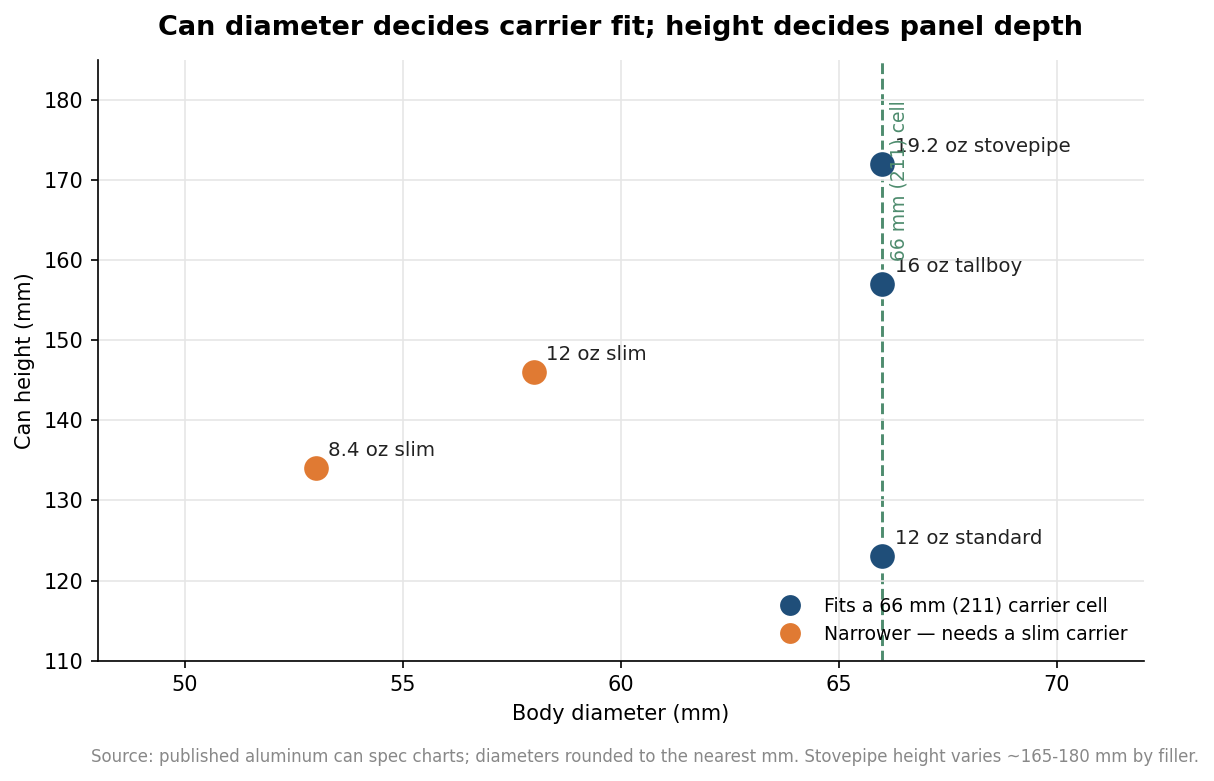
Where fit genuinely breaks is with narrower cans. A 12-ounce slim can, the format used for most hard seltzers and many energy and functional drinks, is about 57 to 58 mm in diameter. An 8.4-ounce slim can, the size associated with energy shots, is narrower still at roughly 53 mm. Drop one of those into a 66 mm cell and it rattles, leans, and can slip out under the handle. Slim cans are not a smaller version of the standard carrier problem; they are a separate carrier entirely, built with tighter cells and, in many cases, a different overall height.
The 66 mm family: what actually varies
Once you know your cans are 211-diameter, the specification conversation shifts from width to two other variables: how tall the can is and how much a full pack weighs. A standard 12-ounce can stands about 123 mm (4.8 inches). A 16-ounce tallboy is roughly 157 mm (6.2 inches). A 19.2-ounce stovepipe runs taller again, commonly in the 165 to 180 mm range depending on the filler, so treat any single stovepipe height as approximate until you measure your own supply.
Height matters most for basket-style and fully enclosed carriers, where the board wraps up and around the cans and a handle bridges the top. For those styles, the panel depth has to match the can, or the graphics land in the wrong place and the pack looks mismatched on the shelf. For a wrap carrier or a top clip that grips the chime, height is less critical because the board engages a fixed point near the top of the can rather than enclosing the whole body. If you sell across multiple can heights, a top-engaging style is generally the more forgiving choice.
Taller cans mean heavier packs
The variable buyers most often overlook is weight. Because the 211 family keeps the same diameter and just grows taller, each step up in volume adds liquid, and a loaded pack gets meaningfully heavier. A full six-pack of standard 12-ounce cans weighs on the order of five pounds. Move to 16-ounce tallboys and the same six cells carry closer to six and a half pounds. A stovepipe six-pack pushes toward eight pounds, roughly 60 percent heavier than the standard pack it looks so similar to.
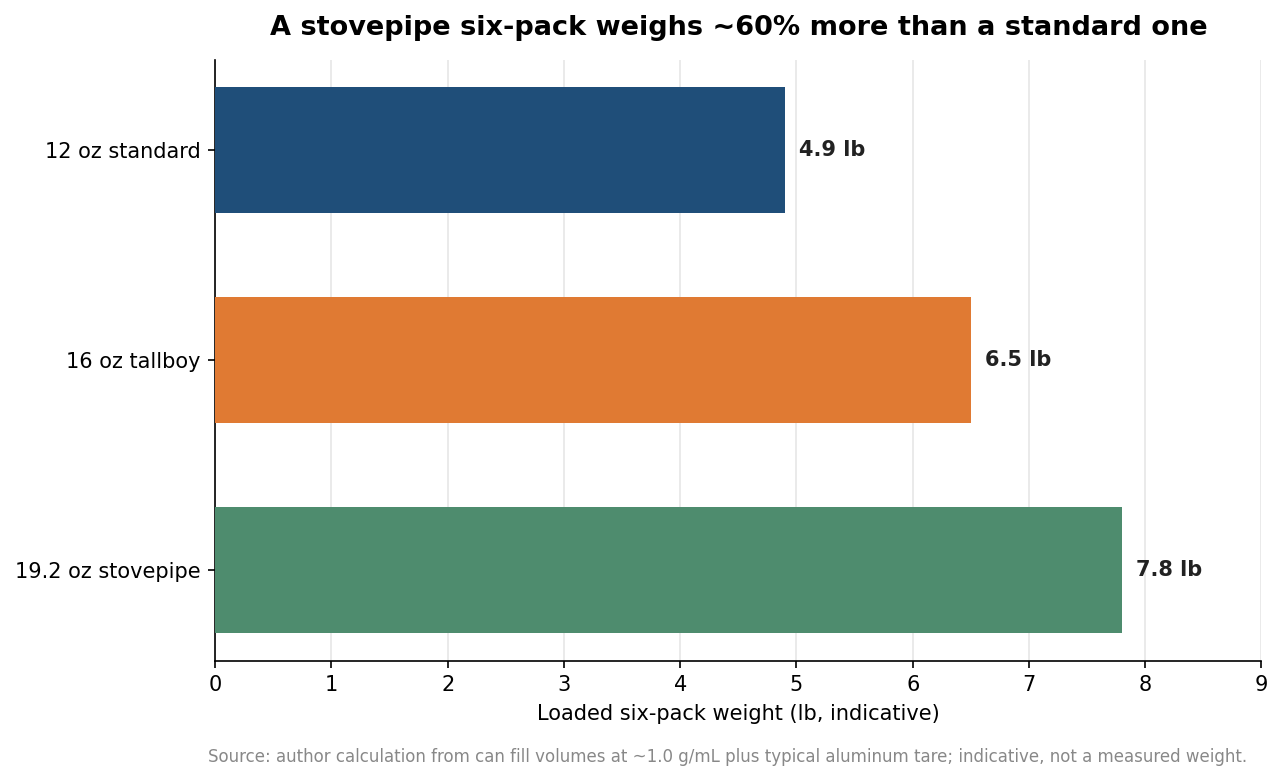
Those figures are indicative rather than exact; they come from the fill volume of each can at close to the density of water plus a typical aluminum can’s tare weight, and real beer runs a touch denser. But the direction is what matters for specifying board. A carrier that holds a standard six-pack comfortably can sag, tear at the handle, or fail at the glue joint when it is asked to lift a stovepipe pack, especially once condensation softens the board. This is why suppliers rate heavier packs for a stiffer caliper and a higher wet-strength board, and why a handle reinforcement that is optional on a 12-ounce carrier becomes worth specifying on a 16-ounce or 19.2-ounce one.
How to specify a carrier that fits the first time
Start by measuring, not assuming. Put a caliper or a ruler across the widest part of your can body and confirm whether you are in the 66 mm standard family or the 57 to 58 mm slim range, because that decision picks your carrier platform before anything else. Then measure the can height to the top of the lid, since that sets panel depth for enclosed styles and tells your supplier whether a stock die will work or whether you need a taller cut.
Next, tell the supplier the exact can you are packing, in ounces and in format name, rather than just “a six-pack.” A tallboy and a stovepipe are both 16-plus-ounce 211-diameter cans, yet they need different panel heights and, arguably, different board weights. Giving the format name up front lets the supplier match a die and a board grade to a pack that will actually be carried, refrigerated, and handled wet. If you run more than one can size, ask whether one carrier can be validated across your range or whether you are better served by two dies; a top-engaging wrap can sometimes cover several heights, while an enclosed basket usually cannot.
Finally, sanity-check the loaded weight against the board spec. If you are moving up from standard cans to tallboys or stovepipes, treat it as a real change in duty, not a cosmetic one, and confirm the caliper and wet-strength rating are sized for the heavier pack. A carrier that fits the can but not the load is the version that fails in a customer’s hand on the walk from the cooler to the car, and that is the failure a little measuring at the specification stage is meant to prevent.